RRB NTPC 2026: 5,236 Posts, Last Date 6 Nov, Exam Pattern

RRB NTPC 2026 applications for graduate-level posts close on 6 November 2026 at 11:59 PM, and the undergraduate (Class 12) window closes on 13 November. The Railway Recruitment Boards have notified 5,236 Non-Technical Popular Categories (NTPC) posts this year: 3,548 under the graduate notice CEN 06/2026 and 1,688 under the undergraduate notice CEN 07/2026. Below are the vacancies, eligibility, fees, exam pattern and the key dates still ahead.
RRB NTPC 2026 key dates
- Graduate (CEN 06/2026): applications from 8 October to 6 November 2026 (11:59 PM); fee payment until 8 November; correction window 9 to 18 November
- Undergraduate (CEN 07/2026): applications from 15 October to 13 November 2026; fee payment until 15 November; correction window 16 to 25 November
- Graduate CBT-1: tentatively from the fourth week of December 2026
- Undergraduate CBT-1: expected in 2027; the date has not been announced
- Where to apply: rrbapply.gov.in
RRB NTPC 2026 vacancies
Graduate level: 3,548 posts
- Goods Train Manager: 2,750
- Senior Clerk cum Typist: 371
- Junior Accounts Assistant cum Typist: 300
- Chief Commercial cum Ticket Supervisor: 127
The Chief Commercial cum Ticket Supervisor post is at Pay Level 6 (starting basic pay ₹35,400). The other three posts are at Level 5 (₹29,200).
Undergraduate level: 1,688 posts
- Commercial cum Ticket Clerk: 700
- Junior Clerk cum Typist: 600
- Accounts Clerk cum Typist: 200
- Trains Clerk: 188
Commercial cum Ticket Clerk posts are at Level 3 (₹21,700). The other undergraduate posts are at Level 2 (₹19,900). Zone-wise breakdowns are in each RRB’s version of the notice and on Testbook’s notification summary.
Fewer posts than in past cycles
The intake has been shrinking. Testbook’s comparison of recent cycles shows graduate-level vacancies falling from 24,678 in the 2019 notice to 8,113 in 2024, 5,810 in 2025 and 3,548 this year. Undergraduate posts fell from 10,603 to 3,445, then 3,058 and now 1,688. Fewer posts mean tougher competition, so the cut-off is likely to stay high. It also makes accuracy more important than attempting every question, given the negative marking.
Eligibility
- Graduate posts: a bachelor’s degree from a recognised university. Age 18 to 33 years as on 1 January 2027.
- Undergraduate posts: Class 12 pass (or equivalent). General candidates need at least 50% marks; SC, ST, PwBD and ex-servicemen are exempt from the 50% condition. Age 18 to 30 years as on 1 January 2027.
- Age relaxation: available for reserved categories as set out in the notice.
Aadhaar-based authentication is part of the application, so make sure your name and date of birth match across Aadhaar and your Class 10 certificate before you submit.
Application fee and refund
- General, OBC and EWS: ₹500. Of this, ₹400 is refunded after you appear in CBT-1.
- SC, ST, ex-servicemen, PwBD, women, transgender, minorities and EBC: ₹250, refunded in full after you appear in CBT-1.
The refund only applies if you actually sit for the first exam, so do not apply just to keep options open.
Selection process and exam pattern
Typing test dropped for graduate posts
The big change this year is for typist posts. The Ministry of Railways said on 11 October that the Computer Based Typing Skill Test has been dispensed with for Junior Accounts Assistant cum Typist and Senior Clerk cum Typist. Typing skills will be assessed after joining instead. There is no aptitude test (CBAT) either, so the graduate process is now CBT-1, CBT-2, document verification and medical examination.
CBT pattern
- CBT-1: 100 questions in 90 minutes, covering general awareness, mathematics, and general intelligence and reasoning.
- CBT-2: 120 questions in 90 minutes, on the same subjects at a higher level.
- Negative marking: one-third of a mark is deducted for each wrong answer.
CBT-1 is a qualifying screening test, and the merit list is drawn from CBT-2. For the undergraduate posts, check the notice for whether a typing test still applies to the clerk-typist roles.
How to apply
- Go to rrbapply.gov.in and create an account (or log in if you registered for an earlier RRB notice).
- Select CEN 06/2026 (graduate) or CEN 07/2026 (undergraduate), and pick your RRB and post preferences.
- Complete Aadhaar authentication and fill in your education details.
- Upload your photograph and signature in the format given in the notice.
- Pay the fee online before the fee deadline and download the confirmation page.
Do not leave the form for the last day. The portal usually slows down near the deadline, and the fee window closes only two days after the form window.
Preparation tips for the December CBT
- With CBT-1 likely in late December, graduate candidates have about seven weeks. Concentrate on past NTPC papers and full-length mock tests.
- Current affairs from the past six to eight months matter in general awareness, including government schemes and sports events.
- Watch for the city intimation slip and admit card on your RRB’s website which RRBs usually release about 10 days and 4 days before the exam respectively.
If you are also weighing other options, see our guides to the PM Internship Scheme 2026, CAT 2026 on 29 November and JEE Main 2027 registration. For vocational routes into work, read about Skill India at 10 years.
Frequently asked questions
What is the last date for RRB NTPC 2026?
6 November 2026 for graduate posts (CEN 06/2026) and 13 November 2026 for undergraduate posts (CEN 07/2026).
How many vacancies are there in RRB NTPC 2026?
5,236 in total: 3,548 graduate-level and 1,688 undergraduate-level posts.
When is the RRB NTPC 2026 exam?
The graduate CBT-1 is tentatively scheduled from the fourth week of December 2026. The undergraduate exam date has not been announced.
Is there a typing test in RRB NTPC 2026?
Not for the graduate typist posts. The Railways has dispensed with the typing skill test for Junior Accounts Assistant cum Typist and Senior Clerk cum Typist.
What is the age limit for RRB NTPC 2026?
18 to 33 years for graduate posts and 18 to 30 years for undergraduate posts, as on 1 January 2027, with relaxation for reserved categories.
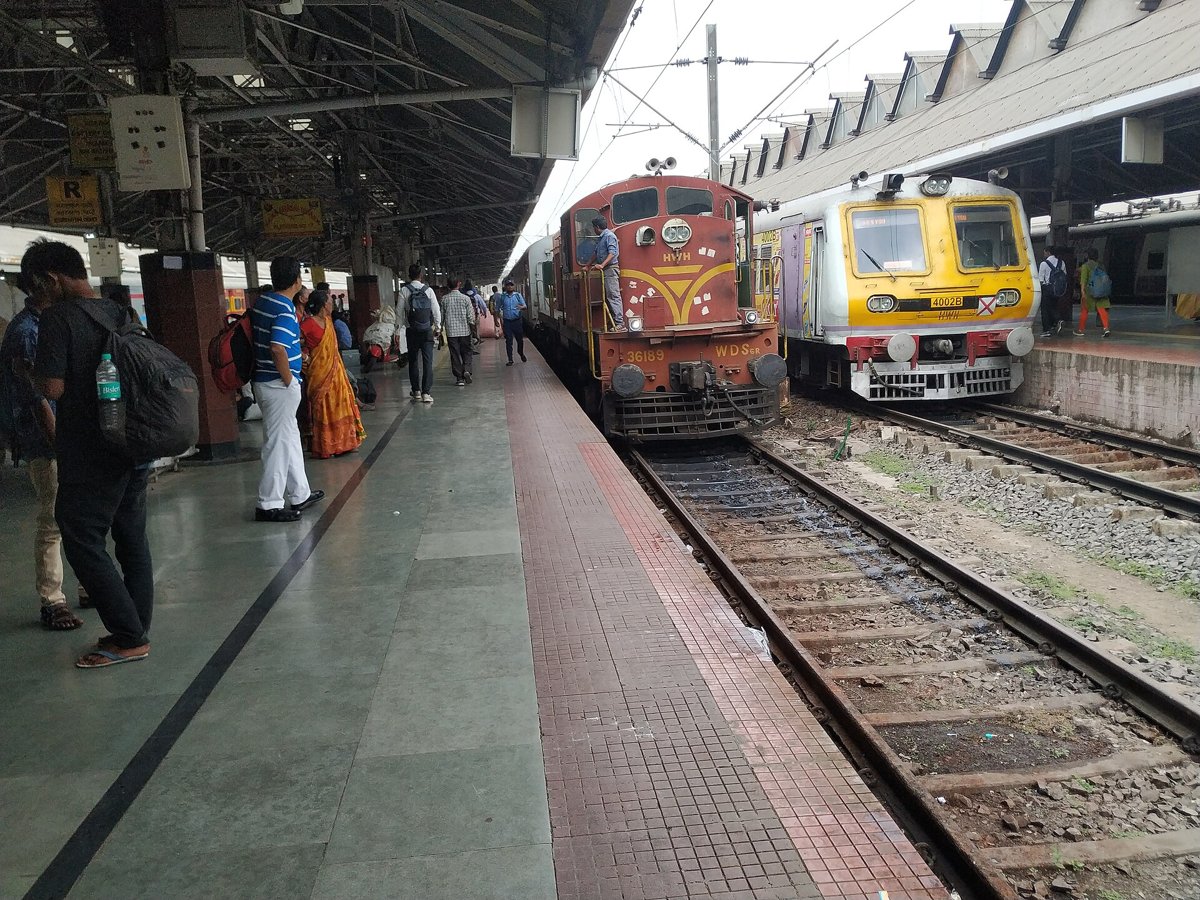
Featured image: Ravi Dwivedi / Wikimedia Commons, CC BY-SA 4.0.