PM Surya Ghar Yojana 2026: The Real Numbers Behind India’s Rooftop Solar Push

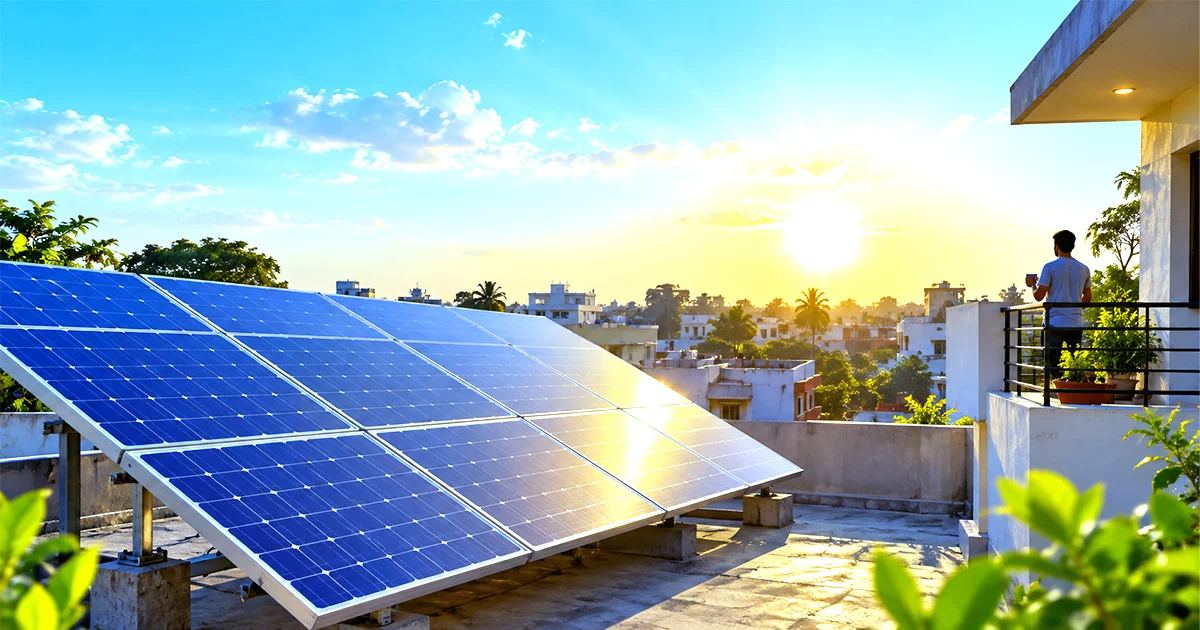
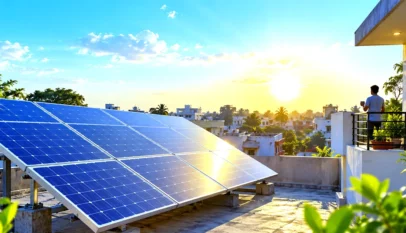
More than a crore Indian households have now registered for free rooftop solar under a scheme most people still only vaguely understand. PM Surya Ghar Muft Bijli Yojana — launched in February 2024 with a ₹75,021 crore outlay — is the government’s flagship push to put solar panels on 1 crore Indian homes by March 2027. With the deadline now less than a year away, here’s where things actually stand, and what you’d actually get if you applied today.
How much money is actually on the table?
The subsidy is simple, and its structure has hardly changed over the years. The first two kW of a system get you ₹30, 000 per kW and the third kW is worth ₹18, 000 making the limit of support ₹78000 for systems that are 3 kW or larger. So, for example, it’s ₹30, 000 if you have 1 kW, ₹60, 000 if it’s 2 kW, and the whole ₹78, 000 for 3 kW and above. Besides getting the subsidy, families qualifying for it may also have the option to get a collateral-free loan of up to ₹2 lakh at an interest rate close to 7%, which should cover the remaining upfront costs of a typical residential installation.
Several states layer their own top-ups on top of the central subsidy, which is worth checking before you assume you know your total benefit. Gujarat offers an additional ₹10,000 per kW through its Surya Gujarat state scheme, continuing through FY 2026-27. Delhi provides a generation incentive of ₹2 per unit for five years on top of the central subsidy. Rajasthan runs an extended rural top-up specifically targeting tribal and BPL households. If you’re in one of these states, it’s genuinely worth checking your specific state DISCOM’s current top-up terms rather than assuming the central ₹78,000 figure is the full picture.
Where the numbers actually stand right now?
As of late July 2026, 39.72 lakh rooftop solar systems had been installed under the scheme, benefiting more than 48 lakh households. July 2026 alone added a record 5.06 lakh new installations — a genuinely sharp acceleration compared to earlier in the programme. Total capacity installed has crossed 12 GW, with more than ₹22,750 crore disbursed in subsidy so far, according to Ministry of New and Renewable Energy figures. Over 1 crore households have registered on the national portal, though registration and actual completed installation are two very different numbers — plenty of registered applicants are still somewhere in the pipeline between application and commissioning.
Here’s a genuinely striking figure worth knowing: DISCOMs have reported that more than 18.93 lakh beneficiaries received a zero electricity bill during at least one billing period after installing rooftop solar — a concrete, verifiable outcome rather than a marketing projection, and a useful data point if you’re trying to gauge whether the scheme’s savings claims hold up in practice.
What you actually need to qualify?
Eligibility comes down to six core conditions, and it’s worth checking all of them before starting an application rather than discovering a mismatch partway through the process. You need to own the property (joint ownership qualifies), hold an active residential DISCOM connection in your name or a family member’s name, and have at least 10 square metres of shadow-free roof area. Beyond that, you’ll need ALMM-listed equipment (meaning panels from the government’s Approved List of Models and Manufacturers), a portal-registered installer rather than any random local vendor, and documentation — particularly your electricity bill and Aadhaar — that matches consistently.
That last point trips up more applicants than you’d expect: if the name on your power bill doesn’t match your Aadhaar exactly, expect delays or rejection. Other common rejection reasons include requesting a system significantly larger than your sanctioned electrical load, using a non-approved vendor or non-ALMM panels, and skipping net metering registration, which is what actually credits you for excess power you send back to the grid rather than just what you consume directly.
Is the subsidy actually running out? Addressing the rumor directly
If you’ve come across messages suggesting the subsidy is about to end or that funds are running out, it’s worth addressing this directly: as of the most recent updates, the scheme has not been officially discontinued, and the government’s implementation guidelines set the scheme’s window through March 31, 2027. Recent Ministry of New and Renewable Energy updates show the programme actively expanding, not winding down, with July 2026’s installation numbers being the highest monthly figure yet. Some of the “apply immediately or lose the subsidy” messaging circulating online appears to originate from sales pressure by installers rather than any actual government announcement — a distinction worth keeping in mind if you’re being pushed toward a same-day decision.
That said, the fact that the scheme runs through March 2027 doesn’t mean waiting until then is a sensible plan either. The actual process — application, feasibility assessment, vendor selection, installation, DISCOM inspection, net metering, and finally commissioning and subsidy disbursal — takes real time, and as adoption accelerates, local vendors and DISCOMs are handling higher volumes, which can extend processing timelines. If you’re already planning to install, the sensible approach is to base your timeline on genuine technical and financial readiness rather than either artificial urgency or unnecessary delay.
How the process actually works, start to finish?
Once your application is verified and approved, government-registered vendors install the panels, and — after DISCOM inspection, net metering setup, and commissioning — the subsidy is credited directly to your bank account via Direct Benefit Transfer, typically within 30 days of final approval. One detail worth knowing if you’re planning to sell your home later: the solar system stays with the property, and the subsidy isn’t clawed back if ownership changes — the new owner simply inherits the equipment and its warranty.
Processing has also genuinely improved over the scheme’s life. Net metering, previously the biggest bottleneck in the entire process, has sped up considerably at most large DISCOMs, with installation now typically processed in 15-20 days compared to 30-45 days in the scheme’s earlier phase.
The bottom line
Around 40 lakh units have been installed against the 1-crore-target, but there is less than a year remaining till March 2027 deadline, and there still remains a lot that can be done. The program should not be considered as one in the final closing period based on what some installation agencies may be saying. On the other hand, the realistic factors on which one can depend are quite basic: make sure that your roof space along with your ownership documents match. In addition to the central government subsidy, check if your state government is giving any extra amount as a top-up.
Use only installers registered on the portal who have ALMM equipment to prevent most frequent reasons for rejection.
Subsidy amounts, eligibility criteria, and state top-up schemes can change. Confirm current details directly at pmsuryaghar.gov.in before applying.