
Why Sugar Prices Have Suddenly Spiked in India, and What It Means for Your Monthly Budget

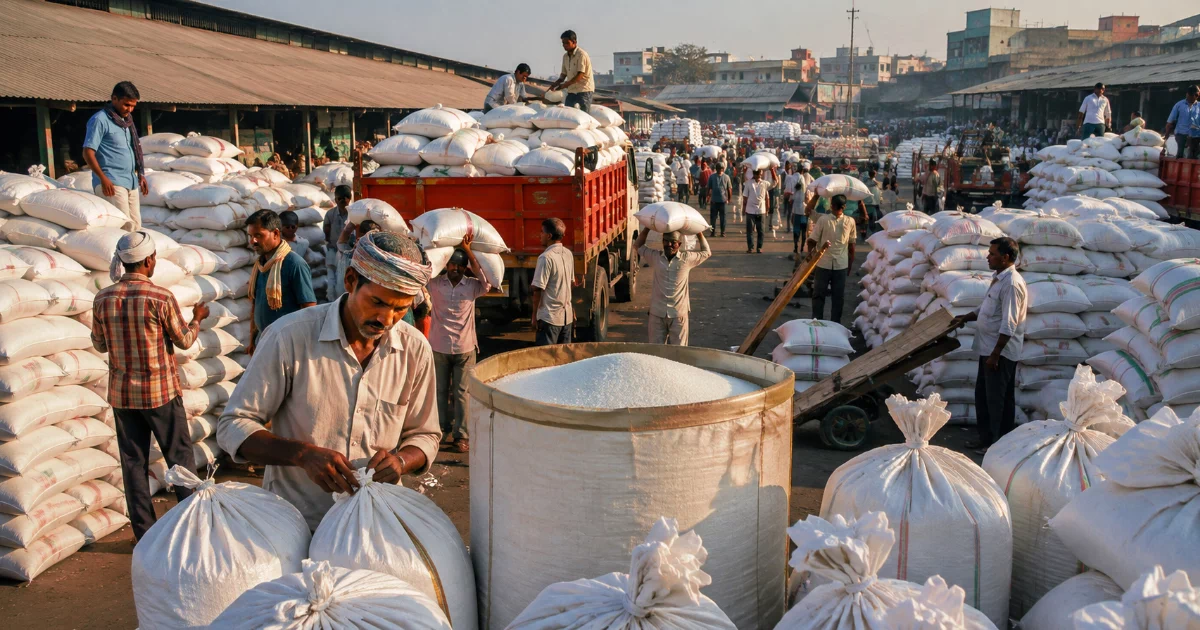
Walk into pretty much any kirana store right now and ask about sugar, and you’ll probably get a slightly exasperated look before the price is even quoted. It’s genuinely jumped that fast. Retail sugar sat around ₹48 a kilogram in mid-July. By the third week of August, it had climbed past ₹55, and in several metro markets, prices touched anywhere from ₹65 to ₹75 a kilo — a nearly 30% jump in a matter of weeks, right as festive-season demand was starting to build.
That kind of sudden move naturally invites a lot of theories, and social media has had plenty of them. Here’s what’s actually behind it, based on what the government, industry data, and independent market trackers have said, and what it genuinely means for your monthly grocery bill.
What’s Actually Driving This?
The Ministry of Consumer Affairs, Food and Public Distribution has been fairly direct about what it considers the real causes here, laying out a handful of factors rather than pointing to any single culprit.
The biggest one is a straightforward production shortfall. This season’s sugar output is now estimated at around 30.6 million tonnes, well below the roughly 34.3 million tonnes initially projected by sugarcane-growing states — a gap of nearly 37 lakh tonnes that’s left the market with meaningfully less supply than everyone had planned around. Two separate problems caused that shortfall. Excess rainfall and waterlogging damaged sugarcane crops in key growing states like Maharashtra, Karnataka, and Gujarat last season, and on top of that, Red Rot and Top Borer disease hit cane yields hard in major producing regions including Uttar Pradesh. Lower quality, lower quantity cane translates directly into less sugar recovered at the mill stage, and that shortfall shows up on store shelves months later.
Global markets haven’t offered much cushion either. International sugar prices climbed more than 16% in under two months, and analysts have revised their outlook for the 2026-27 global sugar season from a surplus to an actual projected deficit of up to 3.3 million tonnes, with Brazil and the EU also cutting their own production forecasts. When the whole world’s supply cushion shrinks at once, India’s ability to simply import its way out of a domestic shortage gets a lot more limited and expensive.
The government has also specifically flagged speculation and hoarding by certain industry players as a factor amplifying the price rise — when traders anticipate further increases and hold back stock rather than releasing it, the sugar actually available in the market shrinks further, pushing retail prices up even faster than the underlying supply shortage alone would explain.
What About the Ethanol Diversion Theory?
This is the explanation that’s spread the most online, and it’s worth addressing directly because the government has pushed back on it fairly firmly. The theory goes that sugar mills are increasingly diverting sugarcane toward ethanol production instead of sugar, artificially tightening supply.
Official data doesn’t really support that as the main driver right now. The share of sugar actually diverted for ethanol has declined, not increased, dropping from around 12% in 2022-23 to roughly 9% in the current 2025-26 season. Nearly three-quarters of India’s ethanol supply now comes from grains, mainly maize, rather than sugarcane, a shift that’s been building for a couple of years specifically to reduce pressure on the sugar supply. That said, it’s worth noting the sugar industry itself has pushed back in the other direction at times, with industry bodies periodically pressing the government for a higher minimum selling price, arguing that the cost mills pay farmers for cane has risen substantially faster than what mills are allowed to charge for sugar. It’s a genuine point of tension between the industry and the government, even if it’s a separate issue from what’s driving this specific price spike.
What the Government Is Actually Doing About It?
A few concrete steps have already been rolled out. The Directorate General of Foreign Trade has approved 10 lakh metric tonnes of duty-free raw sugar imports under a special quota system, valid until October 31, 2026 — notably, the first time in a decade that India has allowed duty-free raw sugar imports at this scale. Sugar mills and refiners with functional refining capacity were able to apply for a share of that quota through the back half of August.
Separately, the government has introduced stockholding limits aimed specifically at large institutional buyers. Starting September 1, any bulk consumer using more than 10 tonnes of sugar a month won’t be allowed to hold stock for more than 15 days, a measure aimed directly at curbing the hoarding behavior officials flagged as part of the problem.
It’s worth being realistic about how quickly these measures will actually show up in prices, though. Most of the approved imports arrive as raw sugar, which still needs refining before it reaches consumers, so the immediate relief from the import decision is limited even though the policy itself is a meaningful shift.
What This Actually Means for Your Wallet?
This is really the part that matters most day to day, and it’s worth being specific about it rather than treating “sugar is expensive” as an abstract headline.
Sugar itself is a relatively small line item in most household budgets on its own, but its reach into other products is much bigger than people usually account for. The vast majority of India’s sugar consumption, historically estimated around 90%, goes into commercial food products rather than being bought directly by households as loose sugar — meaning the real impact of this price spike shows up less in your sugar jar and more in the cost of sweets, biscuits, packaged snacks, soft drinks, and pretty much anything processed that uses sugar as an ingredient. With festive season already driving up demand for mithai and confectionery specifically, this is about the worst possible timing for a price spike of this size, and sweet shop owners in several cities have already flagged rising input costs ahead of the season.
If you’re the kind of household that bakes, makes sweets at home for festivals, or runs a small food business, the impact is more direct and immediate — a nearly 30% jump in your core ingredient cost isn’t something that’s easy to absorb without either raising your own prices or accepting a thinner margin.
Is Relief Actually Coming?
There’s a genuinely hopeful data point buried in all of this. India’s 2026-27 sugar production is currently forecast to rise around 15%, to roughly 35 million tonnes, aided by a strong monsoon this year. If that forecast holds, supply conditions could meaningfully ease later in the season, bringing prices down from where they sit right now. Until that harvest actually comes in, though, import policy, weather patterns, and global demand are likely to keep driving short-term price swings, so it’s reasonable to expect prices to stay elevated, at least through the current festive stretch.
Frequently Asked Questions
Why have sugar prices increased so much in India in 2026?
A combination of lower-than-expected domestic production due to weather damage and crop disease, tighter global sugar supplies, and flagged speculation or hoarding by some industry players have together pushed retail prices up nearly 30% within a few weeks.
Is ethanol production the reason behind the sugar price hike?
The government has specifically denied this, pointing to data showing the share of sugar diverted for ethanol has actually declined in recent years, with most of India’s ethanol now coming from grains rather than sugarcane.
What has the government done to control sugar prices?
The government has approved 10 lakh metric tonnes of duty-free raw sugar imports until October 31, 2026, and introduced stockholding limits on large bulk buyers starting September 1 to curb hoarding.
Will sugar prices come down soon?
Immediate relief is limited since most approved imports need refining before reaching consumers, but a forecasted 15% rise in India’s 2026-27 sugar production, aided by a strong monsoon, could ease prices later in the season if the harvest meets expectations.
How does the sugar price hike affect the average household?
While loose sugar is a relatively small direct expense for most households, the price hike is expected to raise costs across sweets, packaged snacks, and processed foods that use sugar as an ingredient, with the impact particularly noticeable during the current festive season.