PM Mudra Loan 2026: Shishu, Kishor, Tarun Limits, Eligibility and How to Apply

A PM Mudra loan is a collateral-free business loan of up to Rs 20 lakh for small, non-farm enterprises, given by banks, NBFCs and microfinance institutions under the Pradhan Mantri MUDRA Yojana (PMMY). There are four slabs: Shishu, Kishor (often spelt Kishore), Tarun and Tarun Plus. Below: limits, eligibility, interest, documents and the JanSamarth application, checked against PIB, the gazette and Lok Sabha answers.
What is a PM Mudra loan?
It is a loan for income-generating work in manufacturing, trading or services, including farm-allied activities such as dairy, poultry and beekeeping. You need no collateral and no third-party guarantor.
Prime Minister Narendra Modi launched PMMY on 8 April 2015. MUDRA Ltd. does not lend to individuals; the loan comes from a Member Lending Institution such as a bank, regional rural bank, small finance bank, NBFC or MFI, as a term loan, working capital limit or overdraft. The interest rate is governed by RBI guidelines, as the PIB release marking 10 years of Mudra puts it.
Mudra loan limits: Shishu, Kishor, Tarun and Tarun Plus
Shishu covers loans up to Rs 50,000, Kishor covers Rs 50,000 to Rs 5 lakh, Tarun covers Rs 5 lakh to Rs 10 lakh, and Tarun Plus covers Rs 10 lakh to Rs 20 lakh.
Tarun Plus was announced in the Union Budget of 23 July 2024 and notified on 24 October 2024. It is open only to borrowers who have taken and fully repaid an earlier Tarun loan, according to the PIB release of 25 October 2024 and the gazette notification S.O. 4658(E).
| Category | Loan amount | Who it suits | Loans sanctioned, FY 2023-24 to FY 2025-26 |
|---|---|---|---|
| Shishu | Up to Rs 50,000 | New or very small units | 8.67 crore loans, Rs 3.22 lakh crore |
| Kishor | Above Rs 50,000 to Rs 5 lakh | Units that are running and want to grow | 7.90 crore loans, Rs 9.00 lakh crore |
| Tarun | Above Rs 5 lakh to Rs 10 lakh | Established units expanding | 56.35 lakh loans, Rs 4.67 lakh crore |
| Tarun Plus | Above Rs 10 lakh to Rs 20 lakh | Only borrowers who repaid a Tarun loan | 1.30 lakh loans, Rs 19,465 crore |
The figures come from a Lok Sabha answer of 3 August 2026, covering 1 April 2023 to 31 March 2026. Of the 17.15 crore loans, 61% went to women and 22% to new entrepreneurs. The November 2026 Cabinet release adds that more than 60.36 crore loans worth Rs 43.34 lakh crore had been sanctioned by September 2026.
Mudra loan eligibility: who can apply?
Any individual who is otherwise eligible to borrow and has a business plan for a small non-corporate, non-farm enterprise can apply. Existing and new units both qualify.
That wording comes from a Lok Sabha reply summarised by PIB on 14 March 2026. Think shopkeepers, small manufacturers, repair shops, transport operators, food stalls, salons and tailors. Pure crop farming is not covered, but allied activities are.
The bank still appraises your credit history and project, so being eligible does not guarantee a sanction.
What is the Mudra loan interest rate?
There is no single fixed Mudra loan interest rate. Each lender sets its own rate under its board-approved policy and RBI guidelines, so the rate varies by bank, category and your credit profile.
For example, SBI’s PMMY page describes its pricing as “linked to EBLR” (its external benchmark lending rate) and lists no processing fee for Shishu and Kishor, and 0.50% plus tax for Tarun. It asks for no margin up to Rs 50,000 and 20% above that. Repayment is up to 5 years below Rs 5 lakh and up to 7 years for Rs 5 lakh to Rs 10 lakh, with moratoriums of 6 and 12 months. Other lenders differ, so get the rate in writing before you sign.
One cost is falling. On 11 November 2026 the Union Cabinet extended the Credit Guarantee Fund for Micro Units (CGFMU) to 31 March 2031 and cut the guarantee fee from 1% to 0.75% a year. CGFMU guarantees Mudra loans up to Rs 20 lakh.
Documents required for a Mudra loan
Lists vary by bank and loan size, but the Maharashtra MSME Commissionerate’s PMMY page lists what is commonly asked for:
- Filled application form and photographs.
- Identity and address proof: Aadhaar, PAN, voter ID or driving licence.
- Business address and ownership or lease proof.
- Quotation for any machinery, vehicle or equipment you plan to buy.
- Project report or business plan with expected sales and cash flow.
- Bank statements, usually for the last six months.
- For an existing business: income-tax returns and financial statements.
- Udyam registration, GST registration or trade licences, where applicable.
How to apply for a PM Mudra loan online on JanSamarth
You can apply online on the government’s JanSamarth portal, or walk into the branch of any participating bank, NBFC or MFI. Both routes are free; the portal does not charge for an application.
The PIB note of 30 March 2026 describes four steps:
- Answer a few eligibility questions on jansamarth.in and choose the business activity loan under PMMY.
- Apply online with basic details and upload the documents.
- View offers from onboarded lenders and get digital approval from the bank you select.
- Track the application status in real time until the branch completes sanction and disbursal.
The portal runs live checks with CBDT, GST, Udyam, UIDAI and credit bureaus, which is why your PAN, Aadhaar and GST details must match. It works in 8 languages and has an assisted mode through banks.
Can I apply offline at a bank?
Yes. Ask the branch for the PMMY application, attach the documents above and get an acknowledgement with a reference number so you can follow up.
Tips before you take a PM Mudra loan
- Use only jansamarth.in or a lender’s own branch or website. As the Maharashtra MSME page notes, MUDRA has not appointed any agents or middlemen for sanctioning loans.
- Keep the same name spelling on Aadhaar, PAN and your bank account, as you would for DBT schemes such as the e-Shram card.
- Repay a Tarun loan on time if you hope to move to Tarun Plus later.
Mudra loan vs other government business loans
Mudra is the broadest option, but not always the cheapest. Street vendors can start with smaller PM SVANidhi working capital loans, which carry an interest subsidy. Artisans in the 18 notified trades should check the PM Vishwakarma Yojana’s 5% concessional loan first. For a wider list, see our roundup of government schemes for families in 2026.
PM Mudra loan FAQs
What is the maximum PM Mudra loan amount?
Rs 20 lakh under Tarun Plus, but only after you repay a Tarun loan. For everyone else the cap is Rs 10 lakh.
Is any collateral needed for a Mudra loan?
No collateral or guarantor is needed. The lender may still take a charge on the assets you buy with the loan.
Is there a subsidy on a Mudra loan?
No regular subsidy is offered today. A one-time 2% interest subvention on Shishu loans was given only in FY 2020-21.
Sources: PIB releases of 25 October 2024, 8 April 2025, 14 March 2026, 30 March 2026 and 11 November 2026; Gazette S.O. 4658(E); Lok Sabha answer, 3 August 2026; SBI PMMY page. Lender rates and fees change; confirm with your bank before applying.
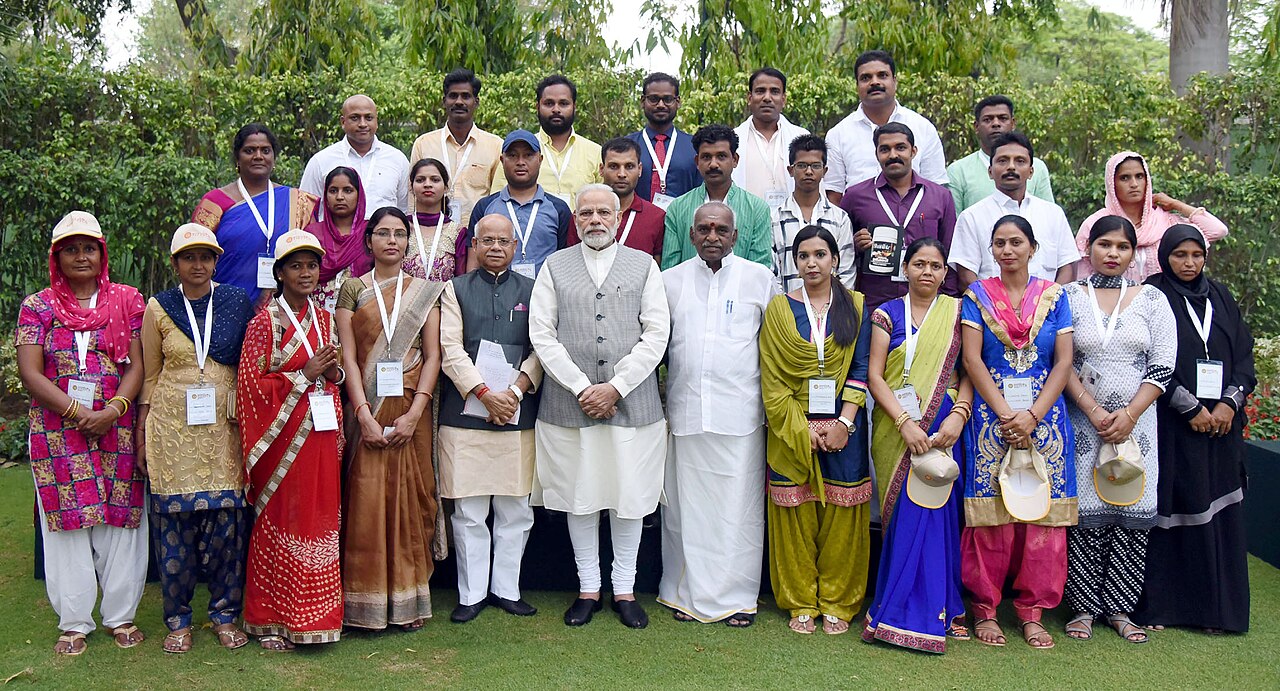
Featured image: Prime Minister’s Office / Wikimedia Commons, GODL-India (resized). PM Narendra Modi with Mudra Yojana beneficiaries in New Delhi, 11 April 2018.