NPS Vatsalya: Eligibility, Rs 250 Minimum, Withdrawal Rules and Tax Benefits

NPS Vatsalya is a pension account that parents or guardians open in a child’s name, from birth up to the age of 18. Under the revised scheme guidelines that took effect in February 2026, the minimum contribution is ₹250 a year, there is no upper limit, and relatives and friends can also add money as gifts. Two years after launch, the scheme had about 4.9 lakh accounts. This guide covers eligibility, how to open an account, where the money is invested, the withdrawal and exit rules, and the tax benefit.
What is NPS Vatsalya?
NPS Vatsalya was announced in the Union Budget 2024-25 and launched on 18 September 2024. It is run by the Pension Fund Regulatory and Development Authority (PFRDA) as part of the National Pension System. The guardian opens and operates the account, but the child is the only beneficiary. The idea is to start saving for the child’s retirement very early so that the money has decades to compound.
PFRDA issued the NPS Vatsalya Scheme Guidelines 2025 through a circular dated 7 January 2026, and they came into effect on 23 February 2026. On the scheme’s second anniversary, PFRDA said NPS Vatsalya had about 4.9 lakh enrolments and assets under management of about ₹403 crore, CNBC-TV18 reported on 18 September 2026.
Who can open an account
- Any Indian citizen under 18 years of age can be enrolled. NRIs and OCIs under 18 can also join.
- The account is opened by a parent or a legal guardian, who operates it until the child turns 18.
- A child who already has a Sukanya Samriddhi Yojana account, or who receives scholarships or other government benefits, can still have an NPS Vatsalya account, according to PFRDA’s FAQs.
Documents needed
- Proof of the child’s date of birth: birth certificate, school leaving certificate, matriculation certificate, PAN or passport.
- KYC of the guardian: proof of identity and address, such as Aadhaar, driving licence, passport, voter ID, NREGA job card or National Population Register documents.
- PAN of the guardian, or a Form 60 declaration.
- For an NRI or OCI guardian, the minor’s sole or joint NRE/NRO bank account. A bank account is optional for resident Indians when opening.
How to open an NPS Vatsalya account
- Online: through the eNPS platform of NPS Trust, or the online facility of a Point of Presence (PoP) such as a bank.
- In person: at a PoP registered with PFRDA, which includes banks and India Post. The guidelines also allow accounts to be opened through CSC e-Governance Services, the Common Service Centre network.
- Choose a Central Recordkeeping Agency and a pension fund when you open the account.
- Make the first contribution of at least ₹250. You will get a Permanent Retirement Account Number (PRAN) for the child.
Contributions
The minimum is ₹250 when you open the account and ₹250 each year after that. There is no maximum. Parents, guardians, relatives and friends can contribute by cheque or cash at a PoP, online through a PoP, or through eNPS. PFRDA advises contributing as much as you can afford, because the scheme relies on long-term compounding.
Where the money is invested
The guardian picks one of the pension funds registered with PFRDA. Under the updated FAQs, pension funds may design their own asset allocation for NPS Vatsalya with up to 100% in equity, or follow an indicative pattern that caps government securities at 20%, debt at 30% and money market instruments at 10%. The pension fund can be changed once in a financial year.
NPS Vatsalya does not pay a fixed interest rate. Returns depend on how the pension fund’s investments perform, so past returns are not a guarantee.
Partial withdrawal rules
Partial withdrawals are allowed only after the account has been open for three years, and only for:
- the child’s education;
- treatment of specified illnesses; or
- disability of more than 75%.
You can withdraw up to 25% of the contributions made, not counting returns, on a declaration basis. Up to two partial withdrawals are allowed before the child turns 18, and two more between 18 and 21, once the young person completes KYC.
What happens at 18
When the child turns 18, the account continues under NPS Vatsalya for up to three years. During this time the young person must complete fresh KYC and add nominees, and no withdrawal is allowed until that is done. They can then choose to:
- shift the full corpus into the regular NPS All Citizen Model and keep saving;
- take up to 80% as a lump sum and use the rest to buy an annuity; or
- withdraw the full amount as a lump sum if the total corpus is less than ₹8 lakh.
If no option is chosen by 21, the account is moved to the high-risk (higher equity) variant under the Multiple Schemes Framework of the same pension fund, and normal NPS exit rules then apply. So the account does not simply convert into a regular NPS account on the child’s 18th birthday; the young person has to make a choice.
Tax benefit
According to PFRDA’s FAQs, under the old tax regime a parent or guardian can claim a deduction of up to ₹50,000 for contributions to a minor’s account under Section 124(4) of the Income-tax Act, 2025. There is no deduction under the new regime. Partial withdrawals of up to 25% of contributions are tax-exempt, and at exit up to 60% of the corpus taken as a lump sum and the amount used to buy an annuity are exempt under both regimes.
Is NPS Vatsalya right for your child?
It suits families who want to lock away a small amount every year for the very long term. Money can only be taken out early for education, illness or disability, and only up to 25% of contributions, so it is not a general savings account.
For other schemes for children and families, see our round-up of new government schemes for women, girls and families. Students should also track the NSP scholarship deadlines. Grandparents aged 70 or above can get free treatment cover with the Ayushman Vay Vandana card, and investors starting the new Samvat can read about muhurat trading 2026.
Frequently asked questions
What is the minimum amount for NPS Vatsalya?
₹250 to open the account and ₹250 a year after that. There is no maximum.
What is the age limit for NPS Vatsalya?
The child must be under 18 years of age.
Can I open NPS Vatsalya if my daughter has a Sukanya Samriddhi account?
Yes. PFRDA’s FAQs say both accounts can be held.
When can I withdraw from NPS Vatsalya?
After three years, up to 25% of contributions, for education, specified illness or disability.
What is the NPS Vatsalya interest rate?
There is no fixed rate. Returns are market-linked and depend on the pension fund.
Where can I get help?
Call the NPS helpline on 1800 110 708 or visit the PFRDA NPS Vatsalya page.
Sources: NPS Vatsalya Scheme Guidelines 2025, PFRDA FAQs (updated 16 June 2026), the PFRDA scheme brochure and CNBC-TV18.
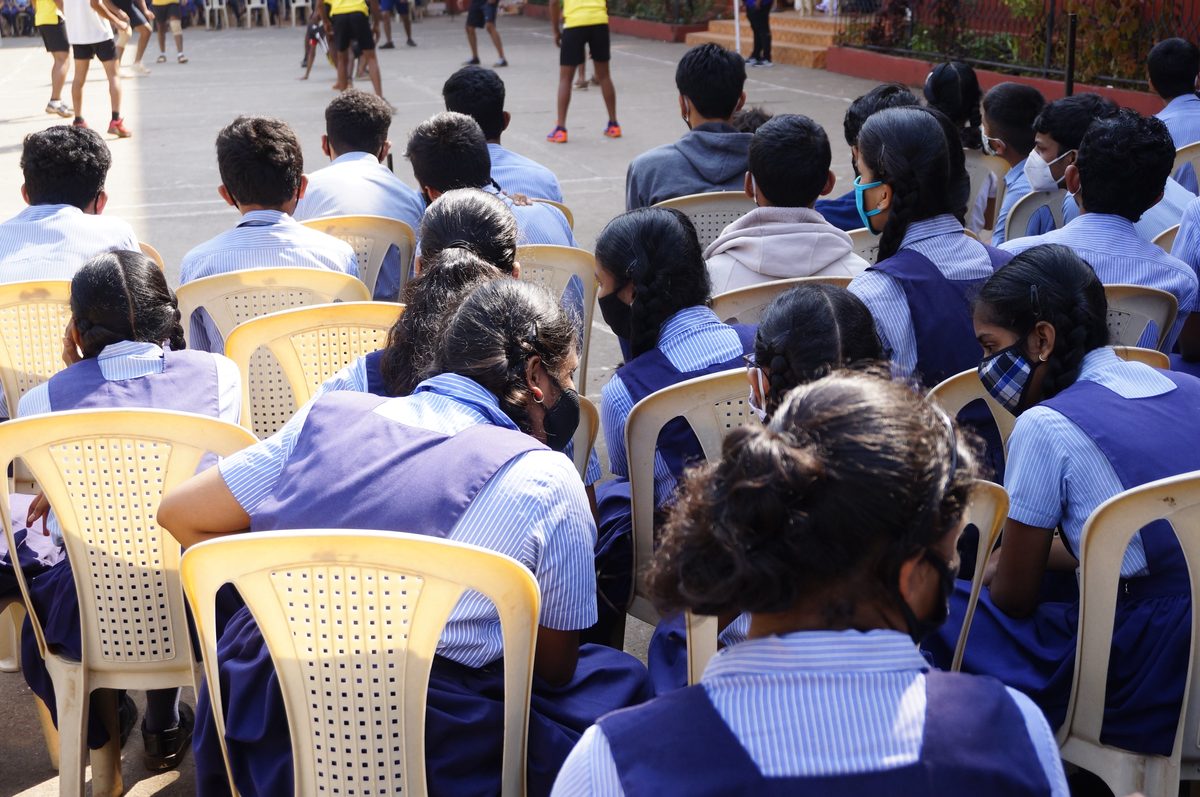
Featured image: Fredericknoronha / Wikimedia Commons, CC BY-SA 4.0 (resized).