Kisan Vikas Patra 2026: KVP Interest Rate, Maturity Period and Calculator

Kisan Vikas Patra (KVP) pays 7.5% a year, compounded yearly, for deposits made between 1 October and 31 December 2026, and doubles your money in 115 months (9 years and 7 months). Put in Rs 1 lakh today and you get Rs 2 lakh back at maturity.
The Ministry of Finance kept every small savings rate unchanged for this quarter in an office memorandum dated 30 September 2026, which the Department of Posts circulated in SB Order No. 12/2026. Rates are reviewed every quarter, so the KVP interest rate can change from 1 January 2027. Below: the maturity table, a KVP calculator, PAN, early encashment, transfer, pledge and tax rules.
KVP interest rate 2026: October-December quarter
The KVP interest rate for this quarter is 7.5% a year, compounded yearly. India Post’s savings schemes page lists it as “7.5% (compounded yearly)” and says the “amount invested doubles in 115 months (9 years & 7 months)”. Upstox’s October-December 2026 rate list shows the same 7.5%.
According to The Economic Times, the government has not changed the rate on any small savings scheme since the December 2024 review.
Does the Kisan Vikas Patra interest rate change after you invest?
No. Paragraph 5(2) of the Kisan Vikas Patra Scheme, 2019 says the maturity period is fixed by the rate in force when you open the account. A cut in a later quarter will not stretch your certificate beyond 115 months.
KVP maturity period: how long does it take to double?
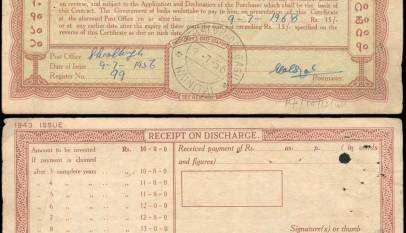
At the current rate, the KVP maturity period is 115 months, or 9 years and 7 months. A certificate bought on 20 November 2026 would mature on 20 June 2036.
The period moves with the rate. When the scheme was notified on 12 December 2019, it set maturity at nine years and five months (113 months). The rule of 72 gives a quick check: 72 divided by 7.5 is 9.6 years, almost exactly 115 months.
Kisan Vikas Patra maturity table and KVP calculator
Every KVP deposit doubles, so the calculator is simple: maturity amount = 2 x deposit. Here is what common amounts become if you invest during October-December 2026.
| Deposit | Maturity period | Maturity amount | Interest earned (taxable) |
|---|---|---|---|
| Rs 1,000 | 115 months | Rs 2,000 | Rs 1,000 |
| Rs 10,000 | 115 months | Rs 20,000 | Rs 10,000 |
| Rs 1 lakh | 115 months | Rs 2,00,000 | Rs 1,00,000 |
| Rs 5 lakh | 115 months | Rs 10,00,000 | Rs 5,00,000 |
India Post’s savings schemes e-book gives the same example: Rs 10,000 becomes Rs 20,000 after 115 months. Doubling in 115 months works out to about 7.5% a year. Figures are our own calculation, before tax.
Kisan Vikas Patra rules: who can invest and how much
- Minimum deposit: Rs 1,000, then any amount in multiples of Rs 100 (paragraph 4 of the scheme).
- Maximum: no upper limit, and you can open any number of accounts.
- Account types: a single adult, a guardian for a minor or a person of unsound mind, a minor aged 10 or more, or up to three adults jointly (Joint A pays all holders jointly, and Joint B pays any holder or the survivor).
- Not eligible: NRIs and HUFs, according to BankBazaar’s KVP guide.
- Documents: two passport-size photos, Aadhaar and PAN, or Form 60 if you have no PAN, as listed in India Post’s e-book.
- Nomination: allowed. Nominees or legal heirs, up to three, can either keep the account running to maturity or close it.
Is PAN mandatory for KVP above Rs 50,000?
Yes, in practice. Under the Finance Ministry’s notification of 31 March 2023, PAN should be given when you open the account. If you skip it, you must submit it within two months once the balance goes above Rs 50,000, credits in a financial year go above Rs 1 lakh, or withdrawals in a month go above Rs 10,000. If you miss that deadline, the account stops working until you submit PAN, as The Hindu BusinessLine reported.
Can Kisan Vikas Patra be encashed before maturity?
Yes, but only after 2 years and 6 months, or earlier in a few special cases. Paragraph 6 of the scheme allows closure at any time on the death of a holder, on forfeiture by a pledgee who is a Gazetted Officer, or on a court order. If the account is closed in that way before 2.5 years, you get the principal plus post office savings account interest (currently 4%) for completed months.
After 2.5 years, the amount you receive comes from a fixed table in the scheme, set in six-month bands. It is always less than the full doubled value, so early exit costs you. If you leave the money after maturity, India Post’s e-book says post-maturity interest is paid at 4%.
KVP transfer and pledge rules
You can move a KVP from one post office to another. Under paragraph 8, it can pass to another person only on the death of the holder (to nominees or legal heirs), on a court order, when it is pledged, or to the surviving holder in a joint account.
Can you take a loan against KVP? Yes. Paragraph 7 lets you pledge the certificate on Form-4, with an acceptance letter from the lender. Eligible pledgees include the RBI, scheduled banks, co-operative banks and societies, public or private corporations, government companies, local authorities and housing finance companies approved by the National Housing Bank.
Is Kisan Vikas Patra interest taxable?
Yes. KVP interest is taxable at your slab rate, and the deposit gets no Section 80C deduction under either tax regime. Groww and BankBazaar both note that no TDS is deducted when you encash the certificate. You must declare the interest in your return yourself.
KVP vs NSC, PPF and post office FD
| Scheme (1 Oct-31 Dec 2026) | Rate | Term | 80C deduction (old regime) | Interest tax |
|---|---|---|---|---|
| Kisan Vikas Patra | 7.5%, compounded yearly | 115 months (doubles) | No | Taxable |
| NSC (VIII Issue) | 7.7%, compounded yearly | 5 years | Yes | Taxable |
| Post office 5-year FD (TD) | 7.5%, compounded quarterly, paid yearly | 5 years | Yes | Taxable |
| PPF | 7.1%, compounded yearly | 15 years | Yes | Tax-free |
| Post office RD | 6.7%, compounded quarterly | 5 years | No | Taxable |
If you want a shorter lock-in and a tax deduction, the NSC interest rate of 7.7% beats KVP. The 5-year post office FD pays yearly interest instead of a lump sum. For tax-free growth, read our PPF rate guide. If you are saving monthly rather than investing a lump sum, a post office recurring deposit fits better, and people over 60 can earn 8.2% through the Senior Citizens’ Savings Scheme.
KVP suits someone who has a lump sum, will not need it for nearly ten years, and wants a fixed, government-backed figure at the end.
Frequently asked questions
What is the KVP interest rate today?
7.5% a year, compounded yearly, for KVP bought between 1 October and 31 December 2026.
How much will Rs 5 lakh become in Kisan Vikas Patra?
Rs 10 lakh after 115 months, if you invest at the current rate.
Is KVP safe?
Yes. It is a Government of India small savings scheme notified under the Government Savings Promotion Act, 1873, and sold at all post offices.
Sources: India Post, savings schemes; Kisan Vikas Patra Scheme, 2019 (G.S.R. 920(E)); SB Order 12/2026 and Ministry of Finance OM, 30 September 2026; The Economic Times, October-December 2026 rates. Rates change every quarter; confirm at your post office before you invest. This is general information, not financial or tax advice.
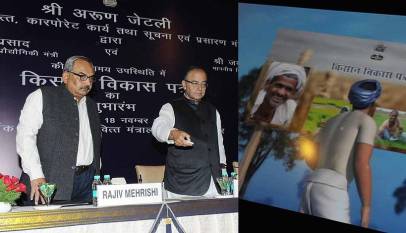
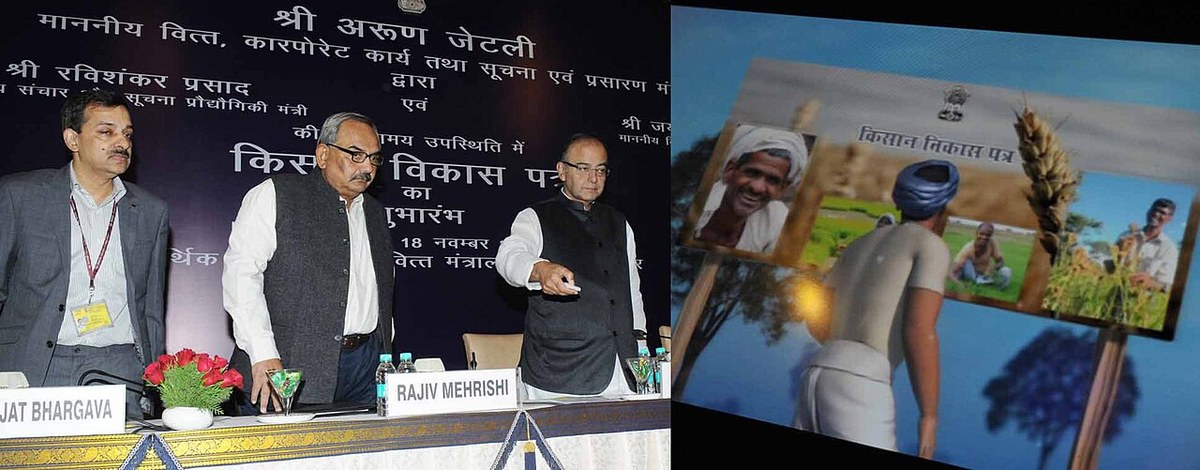
Featured image: Ministry of Finance of India / Wikimedia Commons, GODL-India (resized). The Kisan Vikas Patra launch event in New Delhi on 18 November 2014.