
FIFA World Cup 2026 Recap: How Spain Won the Biggest World Cup Ever

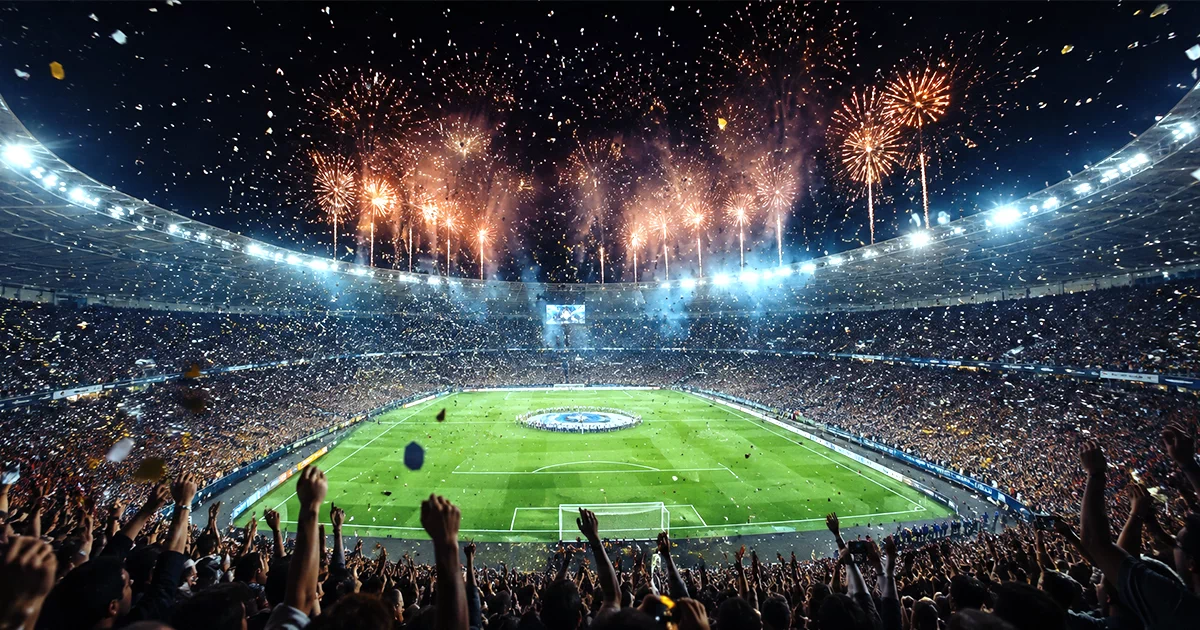
Spain won the 2026 FIFA World Cup, defeating Argentina 1-0 after extra time in the final on July 19 at New York New Jersey Stadium. Ferran Torres scored the winning goal in the 106th minute. It was Spain’s second World Cup title, sixteen years after their first in 2010, and it capped off the largest World Cup in history with 48 teams, 104 matches, and three host nations for the first time ever.
It’s been a couple of weeks now, and honestly, the World Cup final still feels like it needs a second watch to properly process. Not because it was chaotic — it was almost the opposite. Spain played patiently for 1h46m before breaking down the opponents. Argentina’s old team as well as 39-year-old Messi’s probably last World Cup performance, was frustrated in every move and they could not break down the opponents. Later, Ferran Torres headed in at close range, which marked the end. Spain, world champions again.
If you missed pockets of the tournament or just want the full picture — how it played out, what records fell, and why this World Cup will probably be remembered as the one that changed the tournament forever — here’s the complete rundown.
The Final: Spain 1-0 Argentina (AET)
On paper it seems like a closely matched game, while in reality Spain controlled proceedings from the first whistle and it took their longest time to score just one. After 20 shots they registered almost 2.0 expected goals, while Argentina failed to register anything.
Emiliano Martínez was nothing short of inspirational with the gloves for Argentina. The keeper’s save after another helped the host team keep Argentina very much in the game until extra time. The deadlock got broken in the 106th minute. After Lamine Yamal, a Near-the-line dribbling, two defensive men got rid of him, and the ball was cut back.
Substitute Ferran Torres headed in from a short distance. Spain needed one goal. Although Argentina did a player second yellow card for the sending off just before the end, it doubly didn’t help the guests.
However, by the end, the visitors’ fate seemed sealed long before. Spain won a huge victory with a new record number of 80, 000 spectators at New York New Jersey Stadium to watch their win. Second of a two-time winning world champion title 1st came back in 2010. It’s not the kind of time frame that is easily accommodated, yet the guys did exactly that.
The Records That Fell
This final wasn’t merely about the scoreline. A number of really significant moments took place on that field, to say the very least.
39 years and 25 days of age was the point when Messi finally made history for becoming the oldest outfield player to represent at a World Cup final, and he set the record at the same time as Sweden’s Gunnar Gren, the last to achieve the feat back at 1958 when he played at 37 years and 241 days. Surprizingly, the very same old record was broken also by Argentina’s Nicolás Otamendi, although the latter did it a bit older, only in case the former had been born in 1984! After coming off the bench, Otamendi achieved second-place on the list and, therefore, both had rewritten the record book, only to be separated by the age of 38 and 157 days. For a time, there were two legends running up and down on the same pitch who were rewriting a record-book that was left untouched for almost seventy years together.
Messi, in his career, became only the second player in the world to reach three different World Cup finals, 2014, 2022, and 2026, joining Brazil’s Cafu, the Brazil legend who had also gone to three World Cup finals through 1994, 1998, and 2002 respectively. Fans on the internet are debating it whether or not this one was actually Messi’s last World Cup appearance but if it was then, how the last scene could better fit than the World Cup where he did not get the victory.
Beyond the fact, one has to mention even Spain’s run which is a great story in itself. When the team walked onto the pitch to be introduced by the stadium, they had already been unbeaten in 38 games in regulation, which was a series going back to March 2024.
World Cup 2026 by the Numbers
If the final alone was enough, this tournament also changed the look and content of World Cup as a concept. A few facts, however, speak better than words.
This World Cup marked the debut of 48 teams, a huge jump in size from the 32-team format which had characterized the competition since 1998. That expansion alone increased the total number of matches from 64 in the last World Cup in Qatar to about 104 this time a real big leap in scale.
Apart from that the World Cup also got another record, being jointly hosted by the three countries: The United States, Canada, and Mexico, in all 16 cities, running for 39 days from June 11 to July 19.
The viewership numbers in the U.S. itself were just incredible. The final between Spain and Argentina, was almost 39 million, breaking the previous record for the most-watched English-language soccer broadcast on American television. For the record, the match’s rating was the highest one for the non-Super Bowl sporting event on US television since the 1984 Winter Olympics. Imagine, a single match to beat over four decades of history!
Back in Spain, the level of celebration was completely different. The parade of the winning side down the central Madrid avenue was planned to get about a millions of attendees. But it was almost double that as the mass crowd filled all the streets up to Plaza de Cibeles where the team waved the prize in front of the audience once more.
Why This World Cup Changes Things Going Forward?
One could easily dismiss the phrase “biggest World Cup ever” as just another marketing slogan four years down the road since its last edition, yet the current one really does it this time and with such convincing manner hardly anybody could disagree. The format involving 48 teams, which was a bit of a concern, that some thought would only dilute the match-ups turned out being one of the greatest final confrontations that any can recall in recent years.
Hosting split across three countries, something that had never been tried before in men’s football, went off without the logistical disaster a lot of critics predicted beforehand.
And soccer’s position in the U.S. sports landscape looks genuinely different now than it did before this tournament. Record attendance figures throughout the group stage, a final that out-rated almost everything except the Super Bowl, and a wave of visiting fans who left with glowing things to say about the host cities — all of that adds up to a real shift, not just a one-off spike in interest.
The bigger question now is what comes next. With the field already being discussed for further expansion in future editions, and the U.S. proving it can deliver at this scale, don’t be surprised if this tournament becomes the new baseline for what a World Cup is expected to look like.
Frequently Asked Questions
Q1: Who won the FIFA World Cup 2026?
Spain won the 2026 FIFA World Cup, beating Argentina 1-0 after extra time in the final on July 19, with Ferran Torres scoring the decisive goal in the 106th minute.
Q2: Was this Lionel Messi’s last World Cup?
It’s widely believed to be Messi’s final World Cup appearance, though he hasn’t made a formal retirement announcement from international football. At 39, he became the oldest outfield player ever to appear in a World Cup final.
Q3: How many teams played in the 2026 World Cup?
The 2026 World Cup featured 48 teams for the first time ever, up from the 32-team format used since 1998, resulting in a record 104 total matches.
Q4: Which countries hosted the 2026 World Cup?
The United States, Canada, and Mexico jointly hosted the 2026 World Cup across 16 cities, marking the first time in history that three nations shared hosting duties.
Q5: How long was Spain’s unbeaten streak before the World Cup final?
Spain entered the final on a 38-match unbeaten run in regular time dating back to March 2024, the longest unbeaten streak by any national team in football history.