
Meta Agrees to Nearly $18 Billion Settlement — Facebook and Instagram Will Change for Teens


Meta has spent years defending Facebook and Instagram against claims that the apps keep young users online for too long. Now some of those arguments have ended with a very expensive settlement — and changes that teenagers in the U.S. will actually notice.
On August 26, Meta reached agreements worth up to roughly $18 billion to settle claims brought by U.S. states over the way Facebook and Instagram treat younger users.
The money is obviously a big part of the story. But it may not be the part that matters most a year from now.
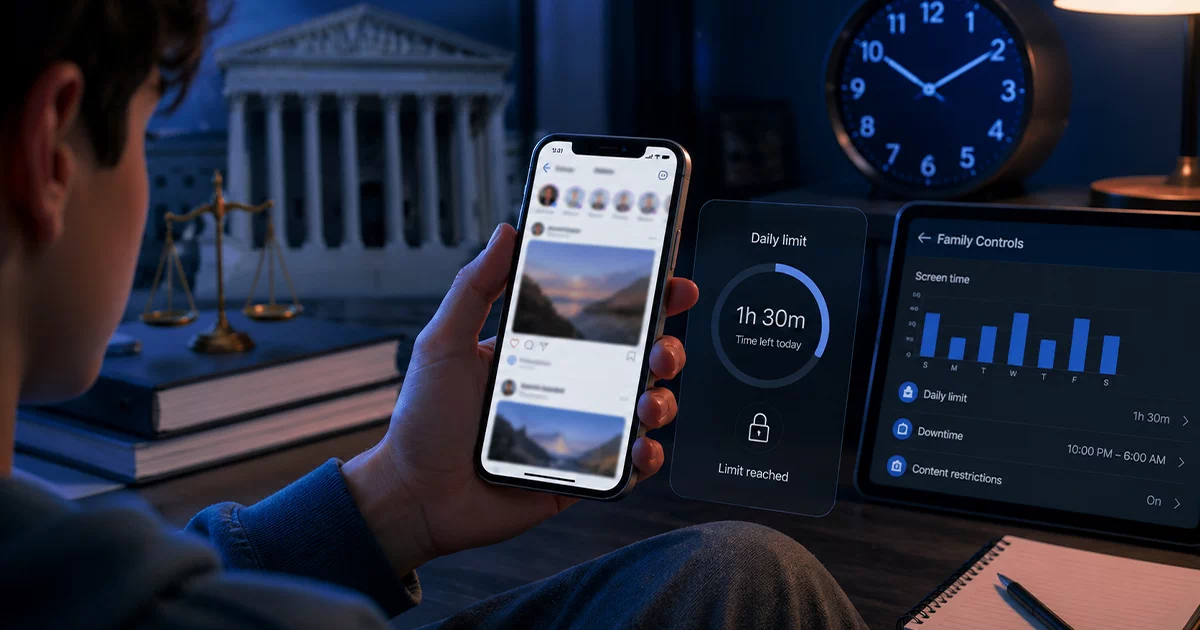
Meta has also agreed to limits on how long teens can use Facebook and Instagram, restrictions during nighttime hours, stronger age checks and several other changes aimed at younger users.
Those rules could affect how millions of teenagers use the two apps.
The Settlement Came in the Middle of a Trial
This wasn’t a case that quietly disappeared before reaching court.
A federal trial had already started in Oakland, California. States were trying to prove that Meta knowingly used features that encouraged compulsive social media use among children and teenagers while playing down the possible risks.
The case grew out of a broader investigation that began several years earlier.
State attorneys general accused Meta of using features such as infinite scrolling, autoplay, notifications and visible popularity signals to keep young people engaged. They also raised privacy concerns involving children under 13.
Meta disputed those allegations.
Instead of waiting for the jury to decide the case, the two sides reached a settlement less than two weeks after the trial began.
There is no admission of wrongdoing from Meta as part of the agreement.
How Much Is Meta Actually Paying?
This part gets confusing because several numbers have appeared in coverage of the settlement.
The main multistate agreement allows for payments of up to about $16.7 billion over ten years. Other settlements, including a separate $1 billion agreement with Texas, can bring Meta’s overall payments close to $18 billion.
The final amount also depends on what happens with Meta’s competitors.
Part of the settlement payment is tied to whether other major social media companies eventually agree to similar restrictions.
So Meta isn’t simply writing an $18 billion cheque tomorrow.
The cost is spread over a decade, and some of it is conditional.
That makes the financial hit easier for a company of Meta’s size to absorb. Meta reported $60.8 billion in revenue in the second quarter of 2026 alone.
The platform changes may prove harder to ignore.
Teens Will Get a Two-Hour Daily Limit
One of the clearest changes is a default daily time limit.
Users under 18 will have a two-hour daily limit across Facebook and Instagram combined. A teenager can’t simply spend two hours on Instagram and then switch over to Facebook for another two.
Time on both apps counts toward the same total.
Teens can go beyond the limit, but they’ll need parental permission to turn it off.
Meta will also start reminding younger users before they reach that point. Prompts will appear after extended periods of continuous use and again as their daily usage increases.
That’s a meaningful change for products built around feeds that can effectively continue forever.
Facebook and Instagram Will Also Go Quiet at Night
Late-night use is another target of the agreement.
For users under 18, Facebook and Instagram will be blocked by default between midnight and 6 a.m.
There will also be a school mode, with notifications muted by default between 8 a.m. and 3 p.m.
These aren’t just pop-up messages telling teenagers that maybe it’s time to put the phone down. They’re default restrictions built into how younger accounts work.
Parents will still have an important role because some settings can be changed with permission.
Meta already offers teen-focused safety features, particularly on Instagram. The difference now is that many protections are tied to a legal agreement rather than being product decisions Meta can freely change later.
The settlement runs for ten years.
Meta Will Have to Get Better at Knowing Who Is Actually a Teen
All these rules create an obvious problem.
They only work if Meta knows how old someone really is.
A 14-year-old can enter an older birth date when creating an account. A child under 13 can do the same.
The settlement therefore requires Meta to strengthen its age-assurance systems.
That doesn’t necessarily mean every Facebook and Instagram user will suddenly have to upload an ID.
Meta can use different signals to identify accounts that may belong to children. The company already uses technology such as age estimation and account activity signals, and the settlement requires stronger systems for detecting users under 13.
There will also be independent auditing of Meta’s compliance.
Age verification is probably going to be one of the more difficult parts of the agreement. Platforms have to distinguish adults from children without turning every social media signup into an invasive identity check.
There isn’t a perfect solution to that problem yet.
Why Did Meta Settle Instead of Finishing the Trial?
The possible downside of losing was enormous.
Before trial, Meta argued that some interpretations of the states’ requested penalties could theoretically push damages as high as $1.4 trillion under extreme assumptions.
That wasn’t a prediction that Meta would actually be ordered to pay $1.4 trillion.
But it showed how far apart the two sides were and how unpredictable a jury verdict could become.
The trial was also bringing Meta’s internal decisions about young users into public view. Executives and employees were being questioned, and Mark Zuckerberg was expected to testify.
Settling gave Meta something companies generally value: a number it can plan around.
Nearly $18 billion is huge. An uncertain court judgment, years of appeals and continuing public disclosure could have been much harder to manage.
The Deal Has an Interesting Catch for TikTok and YouTube
Meta doesn’t want to be the only company operating under stricter rules.
And the settlement appears to recognize that problem.
Around $5 billion of Meta’s potential payment is connected to whether major competitors including TikTok, YouTube and Snapchat eventually accept comparable settlement terms.
That creates an unusual situation.
If similar restrictions spread across the industry, Meta pays more.
If competitors don’t end up operating under comparable terms, Meta’s payment can be lower.
Why would that matter?
Imagine Instagram has strict time limits for teenagers while another short-video platform allows them to keep scrolling without the same restrictions. Some of that attention could simply move elsewhere.
For Meta, this isn’t only a child-safety issue. It can become a competitive issue too.
Marketers Should Pay Attention to the Changes
Brands targeting adults probably won’t wake up to a completely different Facebook or Instagram because of this settlement.
Campaigns aimed heavily at teenagers are another matter.
If teens spend less time on Meta’s apps, there are fewer opportunities to show them ads and organic content.
Late-night campaigns could be affected too. A brand accustomed to strong engagement from younger audiences around midnight can’t assume that behavior will continue in the same way once the restrictions are active.
Stronger age verification could also change the size of audiences available through Meta’s advertising tools.
That isn’t automatically bad.
A smaller audience that is more accurately identified by age may be more useful than a larger one containing users who entered false birthdays.
But marketers will need to watch the data rather than assume historical teen engagement patterns still apply.
This Probably Won’t Stop With Meta
Facebook and Instagram aren’t the only platforms facing questions about young users.
TikTok, YouTube, Snapchat and other social products have faced their own lawsuits, regulatory investigations and political pressure over child safety.
That’s why this settlement could end up being more important than the amount Meta pays.
Regulators now have a real example of a major social media company accepting time limits, nighttime restrictions, stronger age assurance and outside oversight as part of a legal settlement.
Other companies will argue that their products are different.
They may also challenge some of the same demands in court.
But regulators now have something concrete to point to when asking why similar protections can’t exist elsewhere.
The Real Test Starts After the Headlines Fade
An $18 billion figure gets attention. It’s supposed to.
But we’ll learn much more from what happens after Facebook and Instagram begin applying these rules to younger users.
Do teenagers actually spend less time on the apps?
Can Meta reliably identify users who lie about their age?
Do parents use the new controls?
Does engagement move toward competing platforms?
And, most importantly, do these changes actually make the experience safer for young people?
Those answers will take longer than a court settlement.
For Meta, paying the money brings one major legal battle closer to an end.
Changing how teenagers use Facebook and Instagram may be the harder part.