Advance Tax Due Date: 15 December 2026 Instalment, Interest and How to Pay

The next advance tax due date is 15 December 2026, a Tuesday. By then, your total advance tax paid for Tax Year 2026-27 should reach at least 75% of the tax you expect to owe for the year. The last instalment, which takes it to 100%, is due on 15 March 2027.
This is the first year each advance tax due date sits under the new Income-tax Act, 2025, which replaced the 1961 Act from 1 April 2026. The calendar has not moved. What has changed is the vocabulary on the payment screen, and that is where people are likely to slip.
Advance tax due dates for Tax Year 2026-27
There are four instalments, and each percentage is cumulative. The Central Board of Direct Taxes lists them in its FAQs on the transition to the Income-tax Act, 2025, and says the quarterly dates and amounts “remain unchanged”.
| Due date | Total paid by this date (at least) | Status on 26 Nov 2026 |
|---|---|---|
| 15 June 2026 | 15% of advance tax | Passed |
| 15 September 2026 | 45% | Passed |
| 15 December 2026 | 75% | Next due |
| 15 March 2027 | 100% | Final |
“Cumulative” matters. The December payment is not a fixed 30% slice. It is whatever brings your total up to 75% of your current estimate. If your income has grown since September, the December cheque grows with it.
Who has to pay advance tax?
You pay advance tax if your tax for the year, after subtracting TDS and TCS, comes to Rs 10,000 or more. CBDT confirms the Rs 10,000 threshold now sits in Section 404 of the new Act and is unchanged from the old law.
In practice, the people caught are:
- Freelancers, consultants, doctors, lawyers and other professionals with no employer deducting tax.
- Small business owners and traders.
- Salaried people with sizeable side income: rent, interest, capital gains or a consulting gig, where TDS doesn’t cover the full tax.
- Investors who booked big capital gains.
Someone whose only income is salary usually owes nothing extra, since the employer’s TDS spreads the tax across the year.
Do senior citizens pay advance tax?
Not if they are resident in India, aged 60 or more, and have no business or professional income. That exemption is in Section 403(3) of the Income-tax Act, 2025. Such retirees can pay any balance as a self-assessment tax at filing time. Interest still counts as taxable income, whether it comes from a Senior Citizen Savings Scheme account or a bank FD.
What about presumptive taxpayers?
Small businesses and professionals who declare income on a presumptive basis under Section 58 pay the whole amount in one go, by 15 March. CBDT says this follows Section 408(2) of the new Act, the same as before.
How to calculate the 15 December advance tax instalment
Estimate your full-year income, work out the tax under the regime you use, subtract TDS and TCS you expect, and take 75% of what is left. Then subtract what you paid in June and September. The balance is your December payment.
A worked example (our own illustration, not an official one): a freelance designer expects tax of Rs 1,00,000 for Tax Year 2026-27 after TDS.
- By 15 June: Rs 15,000 (15%)
- By 15 September: Rs 45,000 in total, so Rs 30,000 more
- By 15 December: Rs 75,000 in total, so Rs 30,000 more
- By 15 March: Rs 1,00,000 in total, so Rs 25,000 more
Now say a big client paid in October and the estimate rises to Rs 1,40,000. The December target becomes Rs 1,05,000. With Rs 45,000 already paid, the December payment is Rs 60,000, not Rs 30,000. Recheck your estimate before every advance tax due date.
What happens if you miss the advance tax due date?
You pay simple interest on the shortfall. Under the new Act, interest for missing an instalment falls under Section 425, which replaces the old Section 234C. Interest for paying less than 90% of your tax by year-end falls under Section 424, replacing Section 234B. CBDT says the rates have not changed.
- Missed instalment (Section 425): 3% on the shortfall for each of the June, September and December instalments, and 1% for March. This is 1% a month for three months, the same rate the Income Tax Department describes for Section 234C.
- Some leeway early in the year: no interest for June if you paid at least 12% by 15 June, and none for September if you paid at least 36% by 15 September.
- Short payment overall (Section 424): 1% per month or part of a month if advance tax paid is below 90% of assessed tax.
If the designer had paid only Rs 45,000 by 15 December, the shortfall against Rs 75,000 would be Rs 30,000. Interest on that would be 3%, or Rs 900 (our calculation). Small, but avoidable if you pay before the advance tax due date.
One fair exception: if the shortfall is because of income you could not have foreseen, such as capital gains, dividends, lottery winnings or first-year business income, there is no interest, provided you pay the tax on it in the remaining instalments or by 31 March.
How to pay advance tax online for Tax Year 2026-27
Pay through e-Pay Tax on the income tax e-filing portal. Log in, go to e-File, then e-Pay Tax, and start a new payment. The department’s payment FAQs list the modes:
- Net banking
- Debit card
- Payment gateway (net banking, debit card, credit card or UPI; charges vary by gateway)
- NEFT/RTGS through a mandate form
- Over the counter at selected bank branches by cash, cheque or demand draft
The challan receipt then appears under Payment History. A generated challan expires 15 days after the CRN is created.
Which Act and year should you select?
Select the Income-tax Act, 2025 and Tax Year 2026-27. The portal FAQ says advance tax for Tax Year 2026-27 falls under the new Act. Payments for AY 2026-27 or earlier, which is income earned up to 31 March 2026, go under the 1961 Act.
This is the mistake to avoid. CBDT asks taxpayers to pick the right year “so that tax credit is granted in correct year”. A December payment tagged to AY 2026-27 lands against last year’s income.
Keep your PAN linked with Aadhaar before you pay. And when you file, match every challan against your tax credit statement; a mismatch is one of the usual reasons an income tax refund gets delayed.
Advance tax due date: quick answers
Is 15 December the last date for the third instalment?
Yes. Under Section 408 of the Income-tax Act, 2025, at least 75% of advance tax must be paid on or before 15 December.
Does FD interest count for advance tax?
Yes. Interest from bank or post office FDs is taxable at your slab rate. If TDS on it doesn’t cover your tax, include it in your estimate.
Can I pay advance tax after 15 March?
Tax paid by 31 March still counts as advance tax for that year under Section 408(3), but you will owe 1% interest for missing 15 March.
Sources: CBDT, FAQs on Interplay and Transition; e-filing portal, General Questions FAQs; Income Tax Department, Interest and Fees; Income-tax Act, 2025.
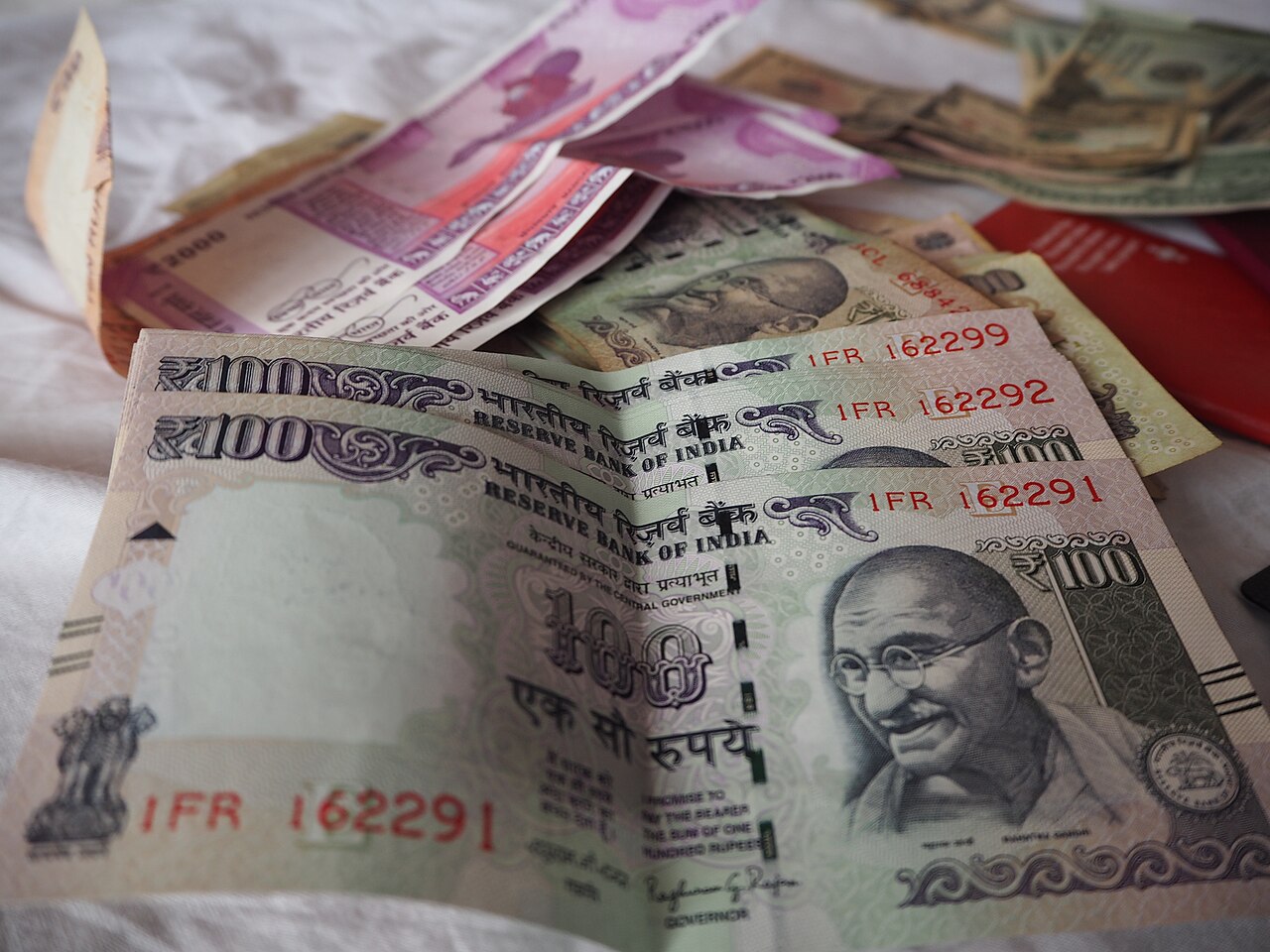
Featured image: Monito – Money Transfer Comparison / Wikimedia Commons, CC BY 2.0. Indian 100 and 2000 rupee notes.