NSAP Gets a New Name and a New Disability Rule: What Changes for Pensioners and Families

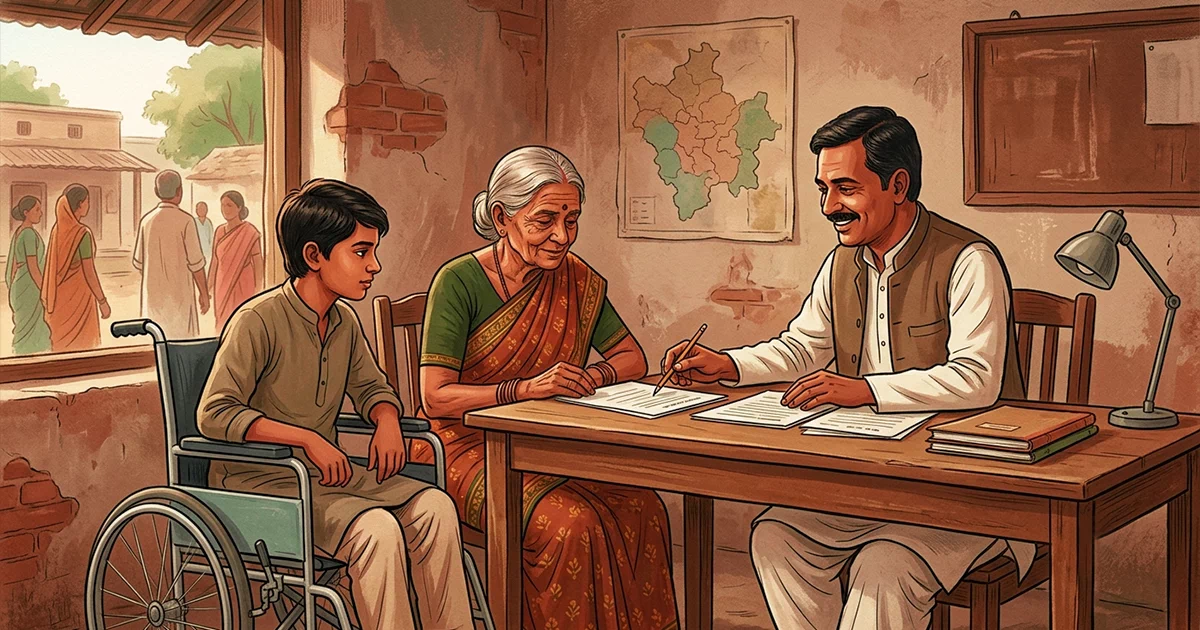
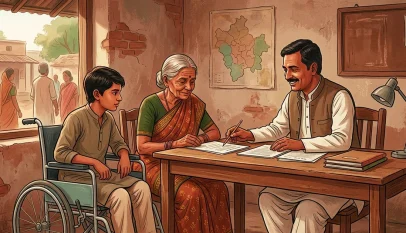
On Wednesday, October 14, the Union Cabinet approved the continuation of the National Social Assistance Programme for another five years. Alongside the funding, it changed the programme’s name and made a significant change to who can receive a disability pension. If you, or someone in your family, receives an old-age, widow or disability pension, or might qualify for one, here’s what was actually announced, and what is still waiting for details.
The key facts
- Programme: National Social Assistance Programme (NSAP), launched on August 15, 1995, to give social assistance to eligible households, including older persons, widows and persons with disabilities
- Period: five years, from 2026-27 to 2030-31
- Outlay: ₹53,428 crore in total, which works out to roughly ₹10,686 crore a year
- Reach: about 3.2 crore beneficiaries, according to the figure reported from the Cabinet decision
- New name: Pradhan Mantri Samajik Sahayata Yojana (PMSSY)
NSAP is a centrally sponsored programme under the Department of Rural Development. It’s implemented by states and union territories, who identify eligible beneficiaries and deliver the assistance. That’s why the way you actually receive your pension, and any extra amount on top of the central share, depends on where you live.
The new names
The programme’s sub-schemes have been renamed too:
| Old name | New name |
| National Social Assistance Programme | Pradhan Mantri Samajik Sahayata Yojana |
| Indira Gandhi National Old Age Pension Scheme | Pradhan Mantri Vridhavastha Pension Yojana |
| Indira Gandhi National Widow Pension Scheme | Pradhan Mantri Vidhawa Pension Yojana |
| Indira Gandhi National Disability Pension Scheme | Pradhan Mantri Divyangjan Pension Yojana |
| National Family Benefit Scheme | Pradhan Mantri Parivar Labh Yojana |
Changing one’s name usually doesn’t affect the amount someone receives from various sources of money through their accounts. You must know that while you are changing the name, different state websites, forms, bank notifications could display either the former or the latter name. If you are not quite sure if something is authentic, go to your local panchayat or social welfare office rather than relying on the information received through forwarding of an email or a message.
The real change: the disability pension
The biggest substantive change is to the disability pension, and it widens eligibility considerably.
- Disability threshold: the benchmark has been lowered from 80% to 40%. The government’s release linked this to the Rights of Persons with Disabilities Act, 2016, which uses 40% as the benchmark disability threshold.
- Age: the minimum age requirement of 18 years has been removed, so eligible persons can receive assistance from birth.
- Revised monthly assistance rates: ₹375 for beneficiaries below 80 years of age, and ₹625 for those aged 80 and above.
Think about what this means in practice. Under the earlier rules, a person with a 50% or 60% disability, who couldn’t qualify under the 80% threshold, was left out of the central scheme. Some states have run their own disability pension schemes with a 40% threshold to cover that gap. With the central scheme now aligned with the 40% benchmark, more people become eligible for central support, and children with disabilities can be covered from birth.
One reporting note: a few outlets have published a figure of about 27 lakh beneficiaries for the expanded disability pension. We couldn’t confirm how that number was derived from the Cabinet release, so treat it as unverified until the Ministry of Rural Development publishes details.
What hasn’t happened yet?
It’s important to be clear on timing. The revised eligibility rules and rates for the disability pension aren’t instantly in force. Reporting on the decision says revised guidelines are to be issued within about three months, and the new criteria apply once they are. Until then, local offices will usually continue to follow the existing rules.
So if you have a family member with a disability of between 40% and 79%, don’t expect to be able to apply under the new rules today. A sensible approach is to:
- Keep the disability certificate and Aadhaar, bank account and income or BPL documents ready.
- Check with your district social welfare or rural development office for updates once the guidelines are published.
- Look at whether your state has its own disability pension scheme that may already cover you.
A note on the money
₹53,428 crore sounds large, but spread over five years and about 3.2 crore beneficiaries, it works out to a modest amount per person. Some analysts writing about the decision have pointed out that the outlay may be tight given the size of the population that could qualify, particularly now that eligibility for disability pension is broader. That’s a fair question to watch rather than a settled fact: whether the programme’s funding keeps pace with the expansion will show up in how quickly states can enrol new beneficiaries.
It also helps to remember that the central amounts under such schemes are often topped up by states. How much extra you receive, and when, varies by state, so the central figure isn’t the whole story.
Who should pay attention to this?
- Families with a person with disability: especially those between 40% and 79% disability, and parents of children with disabilities
- Older persons and widows: the rates and structure for old-age and widow pensions weren’t described as changed in the announcement, so continue as before and watch for updates
- Panchayat and ward-level workers: who will be handling the new names and eventually the revised guidelines
The bottom line
The Cabinet decision has multiple outcomes: it ensures one of India’s longest-standing social security programmes will continue until 2031, it changes the name of the scheme and its sub-schemes, and it allows disability pension to be available to a much larger number of people by dropping the threshold to 40% and scrapping the minimum age of eligibility. The name change is the most readily noticeable of these, but the disability adjustment will probably impact the lives of many most directly. Look out for the updated guidelines in the coming months, as that is the time when the specifications as well as the date you can start to make an application will get revealed.
This article was made with information from the reports published on the day Cabinet of Ministers met and decided something on October 14, 2026. The official documents might give a little more detail for the different rates, eligibility and process. So, it will be good of you to contact the Ministry of Rural Development or your state’s departments for social welfare in case you want clarification or guidance about a possible application.